02
May 2026
AI Voice Agents for Inbound Leads: What They Actually Do and When to Build One
What an AI Voice Agent Actually Is
An AI voice agent is a software system that calls your inbound leads automatically — typically within 60 to 90 seconds of form submission — has a real conversation with them, qualifies them based on criteria you define, and books a meeting directly into your sales team's calendar.
It's not a bot reading from a script. Modern AI voice agents built on large language models understand natural speech, handle objections, ask follow-up questions, and adapt to what the lead actually says. The lead experience, done well, is indistinguishable from speaking with a junior sales rep.
The difference: it works at 2 AM, on a Sunday, and can handle 50 simultaneous calls without putting anyone on hold.
The Problem It Solves
Most businesses with inbound lead pipelines have the same hidden problem: lead response time.
A lead fills in a form. On average, they wait 6 to 8 hours before a human calls them. By then, they've filled in two competitors' forms as well. The intent window — the 5 to 15 minutes after a form submission when a lead is most engaged — has closed completely.
The data on this is consistent: leads contacted within 5 minutes of submission are 21 times more likely to qualify than those contacted after 30 minutes. Most sales teams can't operationally hit that window. An AI voice agent can — every time, without exception.
Beyond speed, the other problem it solves is volume. Most businesses can't justify a full-time SDR team for 60 to 100 inbound leads per month. The AI voice agent functions as your SDR, qualifying and booking without the headcount cost.
What a Good Implementation Looks Like
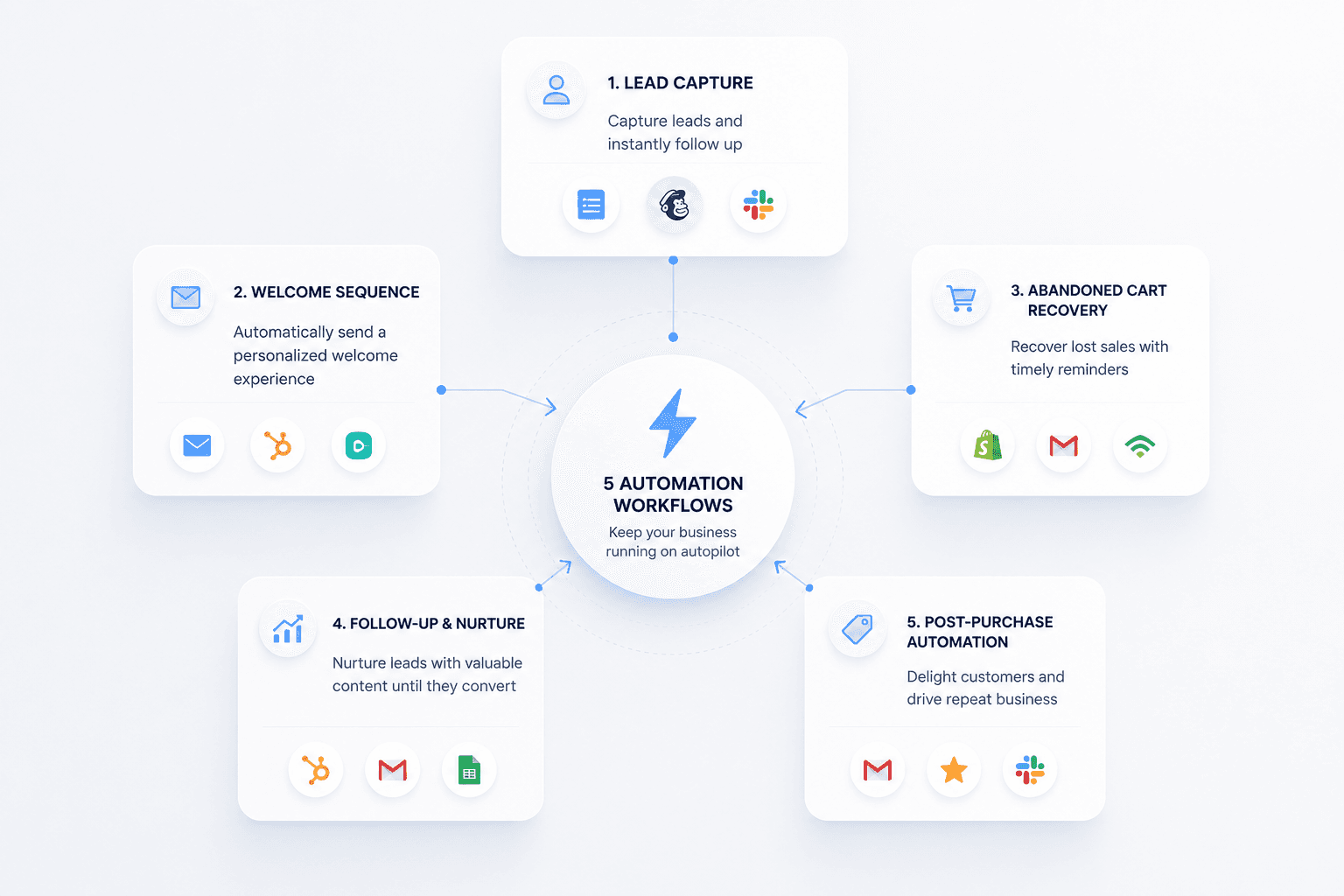
A properly built AI voice agent deployment isn't just the calling software. It's the full workflow it connects:
Trigger: Lead submits a form on your website or ad → webhook fires → voice agent initiates a call within 90 seconds
Conversation: Agent greets the lead by name, explains who's calling, asks 3–5 qualifying questions relevant to your sales process
Booking: If the lead qualifies, the agent offers available slots from the sales team's live calendar and confirms the meeting
CRM entry: Full call transcript, lead score, and booked appointment logged automatically in your CRM
Follow-up: Confirmation message via WhatsApp and email sent immediately after the call
The key variable is the qualification script. The agent is only as good as the questions you train it to ask. We spend significant time on this before any system goes live — because an agent booking unqualified demos wastes everyone's time.
When It Makes Sense to Build One
An AI voice agent is worth building when:
You have consistent inbound lead volume (30+ leads per month minimum) and a defined sales process with clear qualification criteria
Your current lead response time is longer than 15 minutes
You're losing deals to competitors who respond faster
You have a sales team spending meaningful time on top-of-funnel qualification that should be automated
Your demo or consultation showup rate is below 60%
It's not the right tool when your lead volume is very low, when your sales process requires deep technical conversations from the first contact, or when your audience has a strong preference for text-based communication over voice.
Conclusion
AI voice agents are not a future technology. Businesses across India are already deploying them for inbound lead qualification — and the ones that get it right are seeing measurable improvements in showup rates, pipeline velocity, and sales team efficiency.
The setup isn't simple. Getting the qualification script right, connecting the CRM properly, and training the agent for your specific sales context takes real work. But the output is a system that never sleeps, never delays, and consistently outperforms manual follow-up at the top of the funnel.
If your inbound leads are sitting uncontacted for hours, you don't have a sales problem. You have a response infrastructure problem. This solves it.